
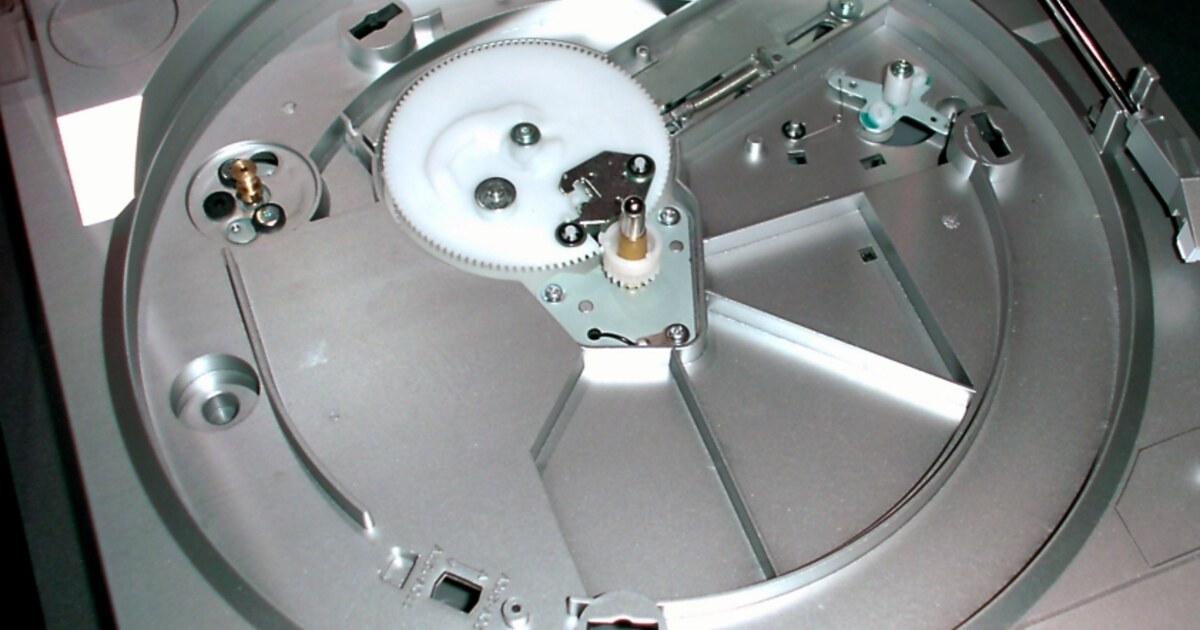
How belt drive works
A motor spins a belt that turns the platter, decoupling vibration from the record surface. Entry audiophile decks — Rega, Pro-Ject, many Thorens — use belt drive for quieter backgrounds on revealing systems. Market reports from Global Market Statistics note belt-drive share in consumer tables due to simplicity and low motor noise.
Trade-offs: belts wear and need replacement; speed stability depends on belt tension and platter mass; startup torque is lower — fine for home listening, weak for heavy scratching.
How direct drive works
The platter sits on a motor spindle — speed control is electronic, torque is high, wow/flutter specs on good units are excellent. Technics SL-1200 series defined DJ culture; audiophile direct drives (some Grand Prix winners) prove the architecture is not inherently "digital sounding."
Older direct drives sometimes suffer from cogging or control-board drift — serviceability matters on vintage buys. Verified Market Reports highlight direct-drive share in club and broadcast markets where instant torque beats belt elasticity.
Sound character: myth vs measurement
Forum lore says belt = musical, direct = punchy. Modern examples blur the line: a well-serviced Technics can sound ethereal; a cheap belt table can rumble. Cartridge, phono stage, and setup dominate perceived tone more than drive topology on equivalently priced decks.
Idler-wheel drive — a third category vintage collectors chase — uses friction wheels and delivers slam prized on classic rock LPs. See brand context in best vintage turntable brands and market sizing in vintage HiFi market 2026.
Who should buy belt drive
Home listeners prioritising simplicity, low noise, and classic audiophile aesthetics. Pair with MM cartridges and integrated amps from our tube amp for vinyl guide. New buyers on budget: Pro-Ject Debut, Rega Planar, U-Turn Orbit class.
Who should buy direct drive
DJs, hip-hop listeners who back-cue frequently, and vintage Technics fans who want plug-and-play torque. Also suits listeners who hate belt replacement chores and prefer one-button 33/45 switching on classic decks.
Secondhand inspection checklist
Belt drive: belt condition, platter bearing rumble (listen at low volume with no record), speed test against phone strobe app. Direct drive: speed lock stability, brake function, dust cover hinges, cue lever smoothness. Both: tonearm bearing play, rust on RCA jacks, missing counterweight.
Budget vintage can beat new cheap tables when serviced — factor £100–200 service into total cost. Start wider context in building a vinyl collection.
Bottom line
Buy the table that fits your use case and service comfort, not forum ideology. Belt for quiet home purity; direct for torque and DJ heritage; idler for collector nostalgia. Upgrade cartridge before chasing exotic drive types.
Matching drive type to genre habits
DJ-style mixing and hip-hop back-cueing favour direct drive; classical and vocal-heavy rock on revealing systems often land on belt-drive tables in reviewer comparisons — though cartridge compliance matters more than drive theology. Idler-wheel vintage suits collectors who enjoy restoration and want rhythmic punch on 70s pressings.
Sample before you buy when possible: bring a familiar record to a shop audition, listen for rumble at quiet passages, and check 33.3 vs 45 stability. A £400 serviced vintage deck frequently outperforms a £400 new table with plasticky platters — service history beats age alone.