Spec sheet: what CD actually delivers
Baseline: Standard CD stores uncompressed 16-bit/44.1 kHz PCM — roughly 1,411 kbps of audio data. That matches lossless FLAC or ALAC streams at the same spec. Measurement-focused writers citing Archimago's bit-perfect comparisons show identical output when the stream is truly lossless and level-matched.
Most daily streaming happens below that ceiling. Spotify's default tops out around 320 kbps Ogg Vorbis on Premium; Apple Music Lossless reaches CD spec but often downconverts on Bluetooth. Our 192 vs 320 kbps guide explains what compressed streams sacrifice — and why 320 kbps radio sits in a sweet spot for discovery without lossless file sizes.
Why CDs still sound different in practice
Mastering variance is the elephant. Labels sometimes ship streaming masters with extra limiting for loudness-normalised playlists while CD retains more dynamic range — or the reverse on modern remasters. Same album, different master, different impression — not "analog vs digital."
Playback chain matters: a £200 CD player into a decent DAC often beats phone → Bluetooth speaker, even if the stream is "lossless." CD removes one variable — no codec, no Wi-Fi dropouts, no app EQ you forgot to disable.
Louder's editorial coverage of format wars notes listeners conflate convenience artefacts (Bluetooth, smart-speaker DSP) with inherent format limits. Fix the chain before declaring streaming hopeless.
When streaming wins
Discovery, portability, and catalogue depth still favour streaming. New Clear Radio listeners often hear an album on our stream, then buy the CD or vinyl for repeat listening — a workflow both formats support. Streaming wins for sampling; CD wins for repeat spins of favourites without burning phone storage or data caps.
Lossless streaming tiers (Apple Music Lossless, Amazon Music HD, Qobuz) close the spec gap entirely when wired to a proper DAC. If you already pay for lossless and listen critically on headphones, CD's technical advantage narrows — mastering and ritual become the differentiators.
When CD wins
Buy the disc when you want guaranteed ownership regardless of licensing, a known master (check remaster credits), and playback without subscription dependency. CD's 2026 resurgence partly reflects collectors who want the bits on the shelf, not in a rented cloud — see Gen Z CD buyers without players for the cultural side.
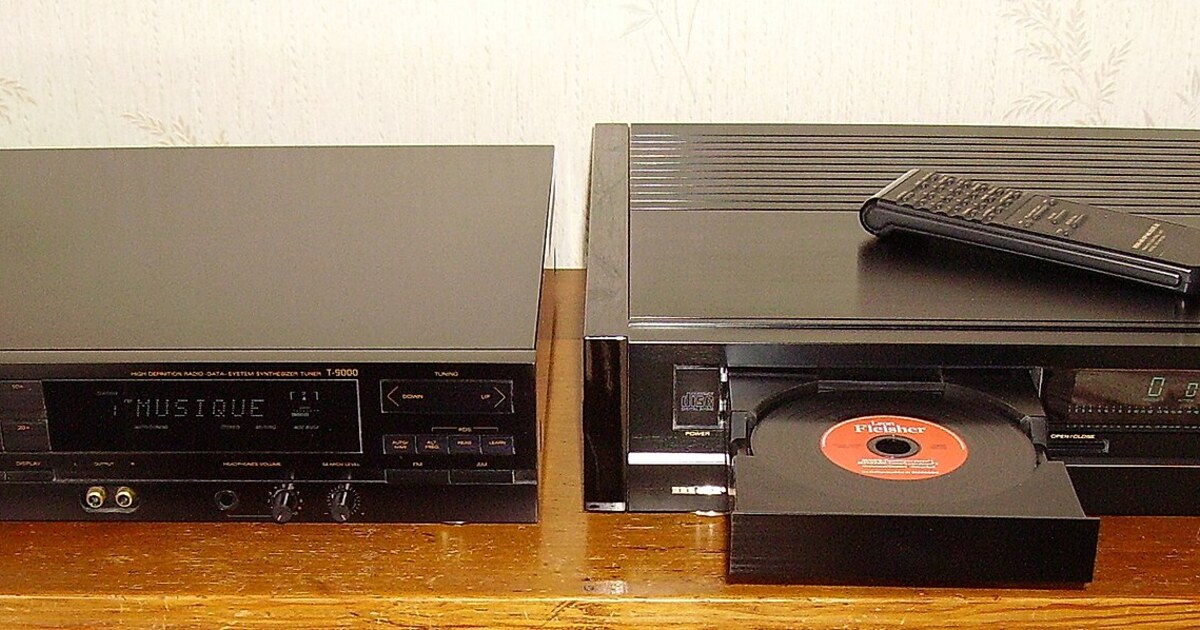
Budget CD playback is cheap relative to audiophile streaming setups: our 2026 CD player rankings start under £300 for credible transports. Pair one with the amp you already use and compare level-matched against your streaming app — let your ears judge.
Decision framework for rock collectors
Stream for exploration, radio, and casual background listening. Buy CD for albums you replay monthly and want immune to grey-outs. Buy vinyl when artwork and ritual matter as much as bits — three formats, one library philosophy: own what you love, stream what you are testing.
Common myths to discard
CD is not "infinitely better" than 320 kbps — blind tests on good gear often show smaller gaps than forum wars suggest. Conversely, "all digital sounds the same" ignores mastering and DAC quality. Stay sceptical of absolutes; measure when curious, listen for pleasure when not.
Bluetooth and the hidden quality tax
Most streaming listening routes through Bluetooth — fine for podcasts, lossy for critical album sessions. Even "lossless" phone streams re-encode over AAC or LDAC depending on device. CD from a player with analogue RCA out sidesteps that stack entirely: disc → DAC → amp → speakers, no app in the middle.
If you must stream losslessly, wired headphones or a USB DAC helps; if you want simplicity without subscription, CD remains the format that does not ask for a monthly fee to hear albums you already paid for once. Rock listeners rebuilding libraries after the CD resurgence often discover this after buying discs first and delaying player purchases — see Gen Z CD buyers without players for the cultural parallel.